

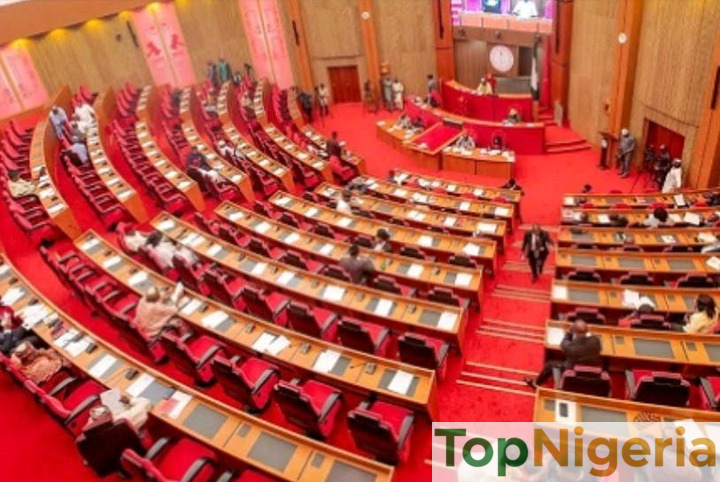
According to report by Vanguard News on Tuesday, June 9, 2026, Senator Opeyemi Bamidele, who is in charge of the Senate, has defended the stance taken by the 10th Senate of Nigeria, denying accusations that it did little more than blindly support executive decisions.
He claims that in order to solve national problems and advance reforms, the Senate consciously opted to work and communicate with President Bola Tinubu’s government.
Bamidele stated that open differences with the executive branch should not be used to evaluate legislative independence during an interactive session in Abuja that was held in the lead-up to the Senate’s third anniversary.
He elaborated on how, for the sake of national stability and efficient governance, numerous disagreements and concerns were secretly settled through talks.
Before important bills and appointments reached the chamber, parliamentarians often communicated with the president, ministers, APC leaders, and heads of government agencies, according to the Senate Leader.
The legislators were able to shape policy, respond to concerns, and head off needless public conflicts, he claimed, thanks to these meetings.
Some nominees who were sent to the Senate for confirmation were secretly sent back for further examination when lawmakers found problems that would have impacted their acceptance, as Bamidele disclosed.
Instead of political posturing, he insisted, such initiatives showed competent leadership.
In response to allegations of anomalies inside the APC, he stated that Senate President Godswill Akpabio had communicated the concerns of parliamentarians to the leadership of the National Assembly on the party’s primary elections.
Regarding the Senate Standing Rules, Bamidele stated that the modifications aimed at enhancing parliamentary traditions through the acknowledgement of institutional expertise and experience.
It was a proposal he personally sponsored that led to the eventual removal of provisions deemed unconstitutional, he said.
Along with a proposal for more openness on members’ salaries, the Senate Leader urged the Revenue Mobilisation, Allocation and Fiscal Commission to make public the salaries of all public officials.
He reflected on the Senate’s term and said that the most difficult moment was during Senator Natasha Akpoti-Uduaghan’s suspension, but that the chamber had accomplished significant improvements in the areas of taxes, educ ation, health, agriculture, and economic policy.