

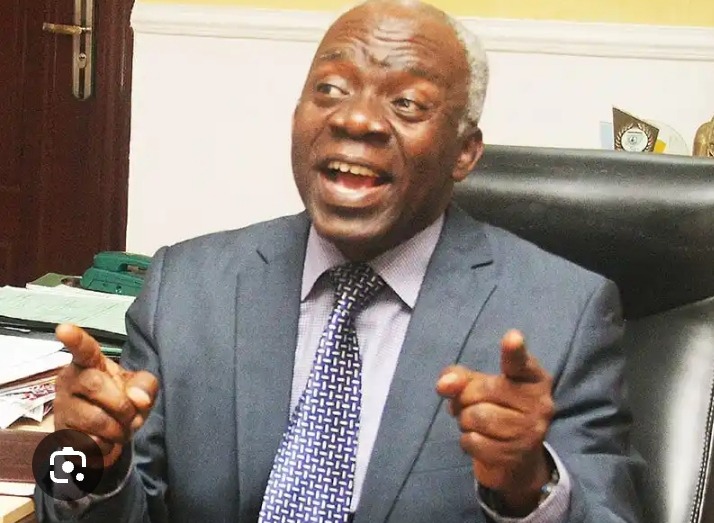
According to a report by the Punch on Friday, April 3, 2026, human rights lawyer Femi Falana has raised fresh concerns over Nigeria’s inability to fully utilise the powers already devolved to states, stressing that the failure of subnational governments to act has slowed meaningful development across key sectors.
Speaking at the fifth Comrade Yinka Odumakin Memorial Lecture held at Airport Hotel Ikeja, Falana explained that although constitutional adjustments and court decisions have transferred responsibilities such as electricity generation, rail transport, and correctional services from the Exclusive Legislative List, most states have not taken concrete steps to implement these changes.
He argued that while political actors frequently call for restructuring, their actions do not reflect a genuine commitment to decentralisation. According to him, many state governments continue to rely heavily on federal allocations rather than exploring the opportunities now available within their constitutional powers. He questioned the level of seriousness among state authorities, stating, “how many states have generated electricity, built rail lines or established prisons? None”.
Falana further noted that Nigeria once operated a more functional federal structure during the First Republic, when regions exercised greater control over their internal affairs, including policing and economic development. However, he observed that the current system concentrates too much authority at the centre, limiting innovation and responsiveness at the state level.
He added that even where legal victories have enabled states to reclaim certain responsibilities, such as in areas of taxation and local governance, the expected improvements have not been fully realised. This, he said, reflects a broader issue of governance capacity and political will at the subnational level.
The event also brought together several notable figures, including Gani Adams, Joe Ajaero, and Omoyele Sowore, who echoed concerns about governance challenges and called for stronger institutions, accountability, and citizen engagement.