

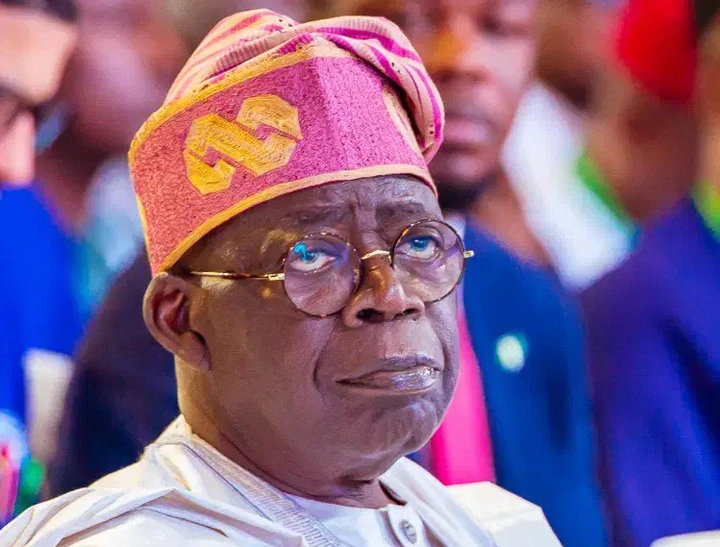
As the 2027 general elections approach, political pundits are shifting their focus to President Bola Tinubu’s path to re-election. While the political ecosystem is already seeing a wave of realignments and defections, discussions on which states the President cannot afford to lose are gaining significant traction.
In 2023, Tinubu secured victory by meeting the constitutional requirement of a simple majority and at least 25% of the votes in two-thirds of the states and the FCT.
However, his victory was narrow in several regions. He won in 12 states, including Benue, Borno, Ekiti, Jigawa, Kogi, Kwara, Niger, Ondo, Ogun, Oyo, Rivers, and Zamfara. To strengthen his mandate in 2027, analysts argue he must flip key states where he suffered defeats.
OSUN STATE
Osun State holds immense symbolic value as President Tinubu’s ancestral home, yet it has become a stronghold for the Accord Party following Governor Ademola Adeleke’s strategic defection from the PDP in December 2025.
After losing the 2022 governorship, the APC narrowly trailed in the 2023 presidential race, losing the state by just over 10,000 votes.
Reclaiming Osun in 2027 requires the APC to bridge internal rifts, specifically the friction between former Governor Gboyega Oyetola’s camp and estranged party stalwarts. The return of influential figures like Prince Dotun Babayemi offers the APC fresh momentum, but the challenge remains steep.
Governor Adeleke is already mobilising for his 2026 re-election under the Accord banner, recently appointing Afrobeats icon Davido to lead youth mobilization. This move aims to solidify his grassroots appeal ahead of the polls.
For Tinubu, winning Osun is not merely a numbers game; it is a critical mission to re-establish his political authority within his South West heartland and secure his home base before the next national cycle.
LAGOS STATE
Lagos remains the President’s primary political base, yet his aura of “invincibility” was punctured in 2023 when he lost the state by a narrow margin to the Labour Party’s Peter Obi (45.81% to 45.04%). The APC is still navigating the aftermath of that historic upset.
Internal critics previously alleged that party leadership prioritised technocrats over the “grassroots” politicians who campaigned in the trenches for Tinubu’s success. In response, the President has pivoted toward reconciliation, notably resolving deep-seated rifts within the State House of Assembly to unify the ranks. Observers viewed the last local government elections in the state—where the APC swept nearly all seats—as a strategic “dress rehearsal” for 2027, aimed at re-establishing total dominance.
The Lagos APC has already mobilised its machinery to ensure Tinubu avoids another home-state defeat. However, the path is fraught with challenges; critics accuse the party of fostering a climate of intimidation that has fuelled widespread voter apathy.
While the APC insists it is fully prepared to deliver a landslide victory in 2027, analysts warn that reclaiming the state’s heart remains a daunting task, suggesting that such bold promises are far easier said than done.
KANO STATE
Kano remains a critical challenge for the 2027 electoral cycle. In 2023, Rabiu Kwankwaso and his former platform, the New Nigeria People’s Party, dominated the state with 58.42% of the vote.
Recognising that Kano’s six million voters are indispensable, President Tinubu has transitioned from an unsuccessful “carrot-and-stick” approach aimed at Kwankwaso to a strategic realignment with the state’s executive arm.
The political landscape shifted significantly in January 2026 when Governor Abba Yusuf officially defected to the APC. Although observers initially viewed this as a tactical move by the Presidency to bypass Kwankwaso, Yusuf has since asserted his authority, positioning himself as the party’s leader in the state over Abdullahi Ganduje. This transition was further solidified in April 2026 by the nomination of Murtala Garo as Deputy Governor.
Despite these shifts, analysts maintain that Kwankwaso retains significant influence in Kano through the Kwankwasiyya movement. Reports suggest friction persists due to the President’s refusal to grant Kwankwaso’s alleged demand for the vice-presidential slot. Furthermore, Kwankwaso’s recent move to the ADC indicates the emergence of a formidable opposition front.
KADUNA STATE
Kaduna remains a critical northern hub where President Tinubu faced a major 2023 setback, losing the state to the PDP’s Atiku Abubakar. Despite being under APC governance, the results exposed a disconnect the administration must bridge to secure the North in 2027.
The political climate has intensified following the exit of former Governor Nasir El-Rufai from the APC. Now a key figure in the African Democratic Congress (ADC) coalition, El-Rufai has emerged as a vocal critic, vowing to unseat Tinubu by leveraging his knowledge of the ruling party’s internal operations.
However, El-Rufai’s activities are currently stalled by legal challenges. He is facing a nine-count charge brought by the ICPC involving alleged financial impropriety.
Some analysts view these charges as a strategic move to silence the state’s opposition. On April 21, 2026, a Kaduna State High Court deferred his bail ruling to June 2026, ordering him to remain in ICPC custody until then.
Despite this, the APC remains confident. Speaker Tajudeen Abbas recently predicted a “landslide” victory for Tinubu in 2027. To succeed, the party will rely on Governor Uba Sani to maintain unity and deliver infrastructure projects that resonate with the grassroots.
IMO STATE
The South East has traditionally been a difficult region for the APC. However, President Bola Tinubu has attempted to bridge this political divide through strategic appointments and targeted infrastructure projects.
Governor Hope Uzodinma of Imo State has emerged as Tinubu’s primary envoy in the region. While Uzodinma has helped the APC gain a foothold in Igboland, converting that local influence into a decisive presidential victory in Imo remains a steep challenge.
For Tinubu, winning the state would serve as both a symbolic and statistical “icing on the cake.”
To the President’s advantage, influential figures like Obinna Iyiegbu (Obi Cubana) and Pascal Chibuike Okechukwu (Cubana Chief Priest) have joined the City Boys Movement. This initiative, championed by the President’s son, Seyi Tinubu, aims to consolidate support for a 2027 victory.
Meanwhile, Peter Obi has criticised these endorsements, questioning why the movement is so prominent in the South East while lacking similar traction in other regions. Analysts argue a convincing victory in Imo is essential to prove the region has finally accepted the President’s Renewed Hope agenda.
DELTA STATE
Delta has long been a PDP stronghold, but recent shifts in the political landscape have given the APC hope. In 2023, Peter Obi’s “Obidient” movement swept the state with 57% of the vote, leaving the PDP and APC with 27% and 15%, respectively.
With prominent figures moving toward the centre, the APC hopes to capitalize on the fragmentation of the PDP. However, analysts remain sceptical about whether the current leadership can flip the “Big Heart” of the Niger Delta, especially given the growing popularity of the ADC.
PLATEAU STATE
Security remains the deciding factor in Plateau State. Long a flashpoint for communal violence and banditry, the state’s stability is critical; analysts warn that a failure to improve security will become a major liability for the President heading into 2027.
Politically, Plateau has undergone a seismic shift and is now an APC stronghold. Although Governor Caleb Mutfwang was elected in 2023 under the PDP, his official defection to the APC in January 2026 consolidated the party’s power. This move was a turning point, bringing the entire North-Central geopolitical zone under unified APC governance for the first time.
The APC’s dominance is now nearly absolute, with the party controlling 23 of the 24 State Assembly seats and all eight House of Representatives positions.
Conversely, the PDP’s influence has waned significantly following high-profile defections. While former Governor Jonah David Jang remains a vocal leader, insisting the PDP is still a force, the party is struggling to maintain its footing.
Electorally, the state initially favoured the PDP due to past internal APC crises.
However, those fractures appear resolved. Before Mutfwang’s defection, some regional groups even proposed a cross-party alliance to ensure stability. Now, with “his house in order,” President Tinubu’s administration has unified the local party structure. This internal reconciliation suggests that the APC will leave no stone unturned to ensure a decisive victory in the 2027 elections.