

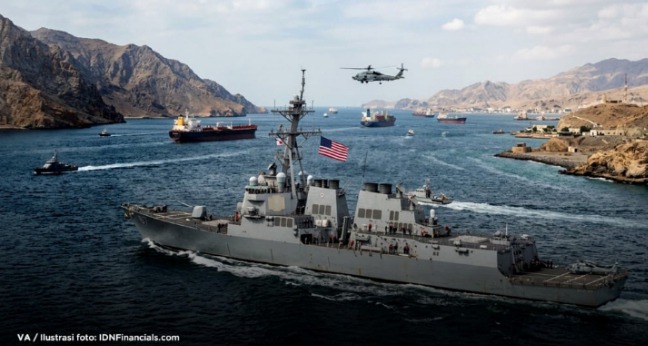
According to Reuters, U.S. naval blockade targeting ships entering or departing Iranian ports in the Strait of Hormuz and Persian Gulf entered its second day Tuesday, but initial results show mixed success in stopping oil tankers linked to Iran and China.
More than 10,000 U.S. Sailors, Marines, and Airmen, supported by over a dozen warships and dozens of aircraft from the 5th Fleet, are enforcing the operation ordered by President Donald Trump after peace talks collapsed in Islamabad.
The blockade aims to choke off Iran’s oil exports — estimated at 1.8–2 million barrels per day — by interdicting vessels of all nations calling at Iranian ports while preserving freedom of navigation for non-Iranian traffic through the critical chokepoint.
CENTCOM initially reported strong compliance in the first 24 hours, with six merchant vessels turning back to Iranian ports on the Gulf of Oman and no confirmed breaches of the main blockade line.
However, shipping data and maritime tracking revealed that at least three to seven vessels, including Iran-linked tankers, successfully transited the Strait of Hormuz on the first full day.
Among them was the Chinese-owned tanker Rich Starry, a U.S.-sanctioned vessel previously flagged for carrying Iranian oil, which exited the Gulf carrying methanol cargo. Another sanctioned tanker also passed despite the operation.
The blockade was explicitly designed to counter the flow of Iranian oil, much of which is believed to reach China via a “shadow fleet” of tankers. Beijing has condemned the move as “dangerous and irresponsible,” while Iran labeled it an act of “piracy” violating international law.
Analysts note that the partial nature of the enforcement — focusing only on Iranian port traffic — has allowed some vessels to navigate through without direct confrontation so far.
Saudi Arabia is reportedly urging Washington to ease the pressure, fearing Iranian retaliation that could disrupt other regional shipping lanes.
Global oil markets showed modest easing amid hopes for renewed dialogue, but analysts warn that prolonged leaks in the blockade could undermine its effectiveness and raise escalation risks in one of the world’s most vital energy arteries.
The situation remains fluid as U.S. forces adjust tactics and diplomatic efforts continue behind the scenes.