
If you’re sending money home from London, paying school fees, or just trying to figure out how far your pounds will stretch in Lagos or Abuja, you need real numbers, not guesswork. The exchange rate pound to naira shifts by the hour, and the figure your bank quotes rarely matches what you’ll actually get at a bureau de change or from a street trader in Allen Avenue.
That gap exists because Nigeria runs two parallel markets. The official exchange rate, set through the Central Bank of Nigeria’s window and used by banks and licensed operators, differs from the black market rate, often called the parallel market, where demand for dollars and pounds pushes prices higher. Knowing both numbers before you convert or remit money protects you from losing value on the transaction.
This article breaks down today’s pound sterling to naira figures across both markets, explains why the two rates diverge, and shows you how to work out exactly how much naira you’ll receive for any amount of British pounds, whether you’re transferring money, traveling, or planning a business payment.
Why the pound to naira exchange rate matters to you
Every point the pound to naira exchange rate moves changes how much value lands in a Nigerian bank account. A one-naira swing per pound might look small, but multiply it across a £500 remittance and you’re talking about thousands of naira gained or lost depending on timing. For anyone managing money across the UK-Nigeria corridor, this isn’t an abstract number on a financial news ticker. It’s the difference between covering rent for your relatives back home or coming up short.
Remittances and family support
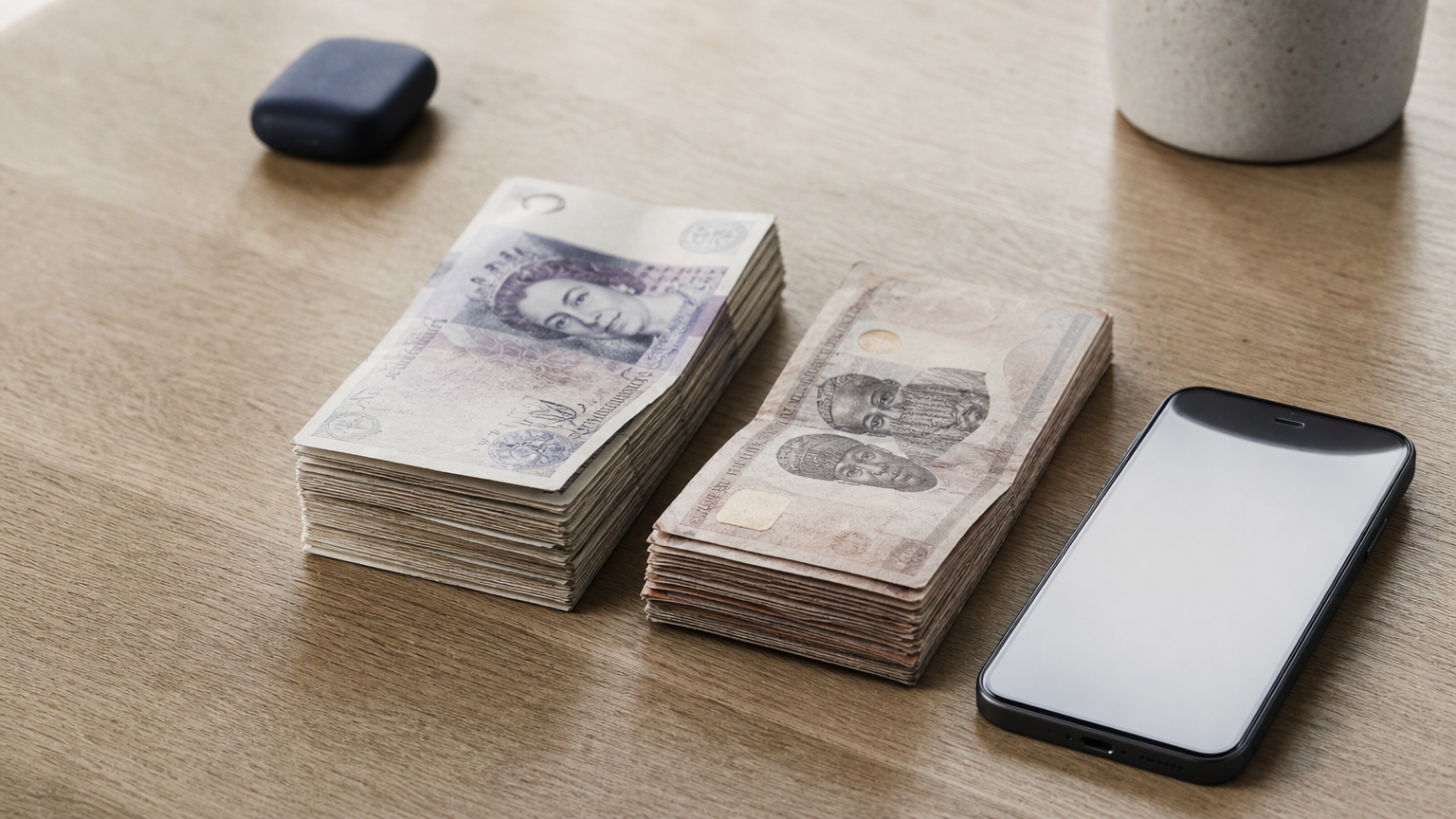
Millions of Nigerians in the diaspora send money home every month, and the pounds naira exchange rate at the moment of transfer determines exactly how far that support goes. Send £200 when the rate favors naira and your family might cover groceries and utilities for weeks. Send the same amount during a weak stretch for the pound, and it barely covers half that. Checking the gbp to naira exchange rate before you hit send on a transfer, rather than after, puts you in control instead of leaving you to react to whatever number shows up on your statement.
A one-naira shift in the exchange rate can mean thousands of naira more or less landing in a loved one’s account.
School fees, rent, and recurring payments
Parents paying UK school or university fees from Nigeria, or Nigerians in Britain sending money for rent and tuition back home, face a different kind of pressure. These payments are often fixed in one currency but budgeted in another, so a sudden move in the exchange rate of pound sterling to naira can blow a hole in a monthly budget that seemed solid a week earlier.
Travel, business, and everyday spending
Travelers converting pounds for a trip to Lagos need to know whether their cash will stretch through the visit or run out by day three. Business owners importing goods priced in sterling watch the british pound to naira exchange rate just as closely, since it directly affects their cost of goods and profit margins. In each case, the rate isn’t background noise. It’s a working number that shapes real decisions:
- How much to remit and when
- Whether to wait for a better rate or convert immediately
- How to price imported goods or services
- How to budget for fees, rent, or travel in advance
How to convert pounds to naira accurately
Converting pounds to naira isn’t just multiplication, it’s about picking the right rate first. Grab the current exchange rate gbp to naira from a reliable source, decide whether you’re using the official or black market figure based on where the money will actually change hands, then multiply your pound amount by that rate. Skipping the second step is where most people lose money, since plugging a bank’s official quote into a street transaction, or vice versa, gives you a number that doesn’t match reality.

Always match the rate to the market where your money will actually be exchanged, not the first number you find online.
A simple worked example
Say the pound to naira exchange rate sits at ₦2,150 per £1 on the parallel market. Converting £300 looks like this:
300 (GBP) x 2,150 (rate) = ₦645,000
Run the same £300 through an official bank rate of, say, ₦1,850, and you’d receive ₦555,000 instead, a gap of ₦90,000 on one transaction. That’s why checking both figures before converting matters more than most people realize.
Tools that keep you accurate
- Use a currency converter that updates in real time, not one cached from yesterday
- Cross-check the exchange rate of gbp to naira against at least two sources before a large transfer
- Factor in transfer fees and commission, since these eat into the naira you actually receive
- Recalculate immediately before sending, since rates can shift within hours
Getting the math right protects the value of every transfer you make.
Official rate vs black market rate: what’s the difference
The official exchange rate comes from the Central Bank of Nigeria’s window and reflects what banks, licensed bureaux de change, and government transactions use. It’s the number you’ll see quoted in official statements and on bank transfer platforms. The black market rate, also called the parallel market rate, forms outside that regulated system, driven by everyday demand for pounds and dollars from importers, travelers, and people who can’t access enough foreign currency through official channels.
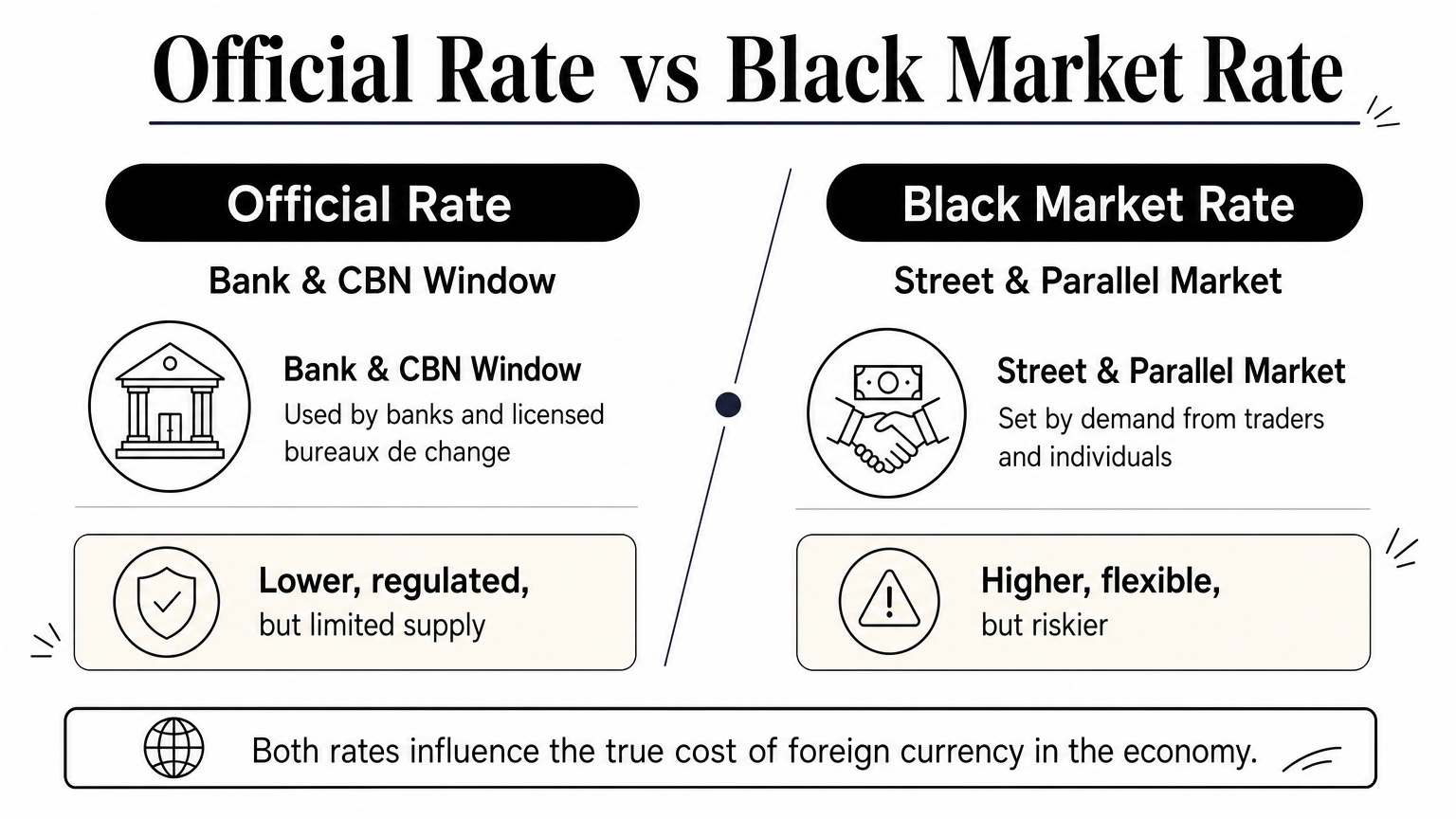
The wider the gap between the two rates, the more scarce foreign currency has become through official channels.
Why the gap exists
Demand for pounds usually outstrips what banks can supply, so people turn to street traders and independent exchange operators who charge more per pound. This gap has narrowed and widened at different points depending on CBN policy, oil revenue, and how much foreign currency the government releases into the banking system. When you compare the pound sterling to naira exchange rate on both markets, that difference tells you how tight liquidity is at that moment.
Which rate applies to you
Which one matters depends entirely on where your transaction happens:
| Scenario | Rate to use |
|---|---|
| Bank transfer or licensed remittance app | Official rate |
| Street trader, local bureau de change | Black market rate |
| Airport currency exchange | Often close to official, sometimes marked up |
| Peer-to-peer transfer via diaspora contact | Usually black market |
Matching your transaction to the correct rate keeps you from over- or underestimating what you’ll actually receive.
What drives changes in the pound to naira exchange rate
Several forces push the exchange rate british pound to naira up or down, and understanding them helps you anticipate rather than just react to a bad rate. None of these move in isolation, so a shift in one often triggers movement in another within days.
Central bank policy and forex supply
Policy decisions from the Central Bank of Nigeria shape how much foreign currency flows into the banking system. When the CBN tightens forex allocation to banks and bureaux de change, licensed operators run short of pounds and dollars, pushing more buyers toward the parallel market and widening the gap with the official rate.
When official forex supply tightens, the black market absorbs the extra demand and rates climb fast.
Oil revenue and dollar reserves
Nigeria earns most of its foreign exchange from oil sales priced in dollars, so falling oil prices or reduced output drain the reserves the CBN uses to defend the naira. Lower reserves mean less intervention in the currency market, which weakens the naira against both the dollar and the pound.
Inflation and import demand
Rising domestic inflation pushes importers to buy more foreign currency to pay overseas suppliers, adding pressure on the pound to naira exchange rate from the demand side. Meanwhile, global movements in the pound’s strength against the dollar also ripple through, since most naira trading benchmarks itself against the dollar first.
Other factors worth tracking:
- Diaspora remittance volumes and timing
- Political stability and investor confidence
- Government forex policy announcements
- Global commodity price swings
Keeping up with the pound to naira rate
Rates move fast, and the gap between official and black market figures can shift within a single day. You’ve now got the tools to check both, calculate what you’ll actually receive, and understand the forces (CBN policy, oil revenue, inflation) that push the exchange rate pound to naira up or down. That knowledge is worth more than any single number, since today’s rate will look different next week.
What won’t change is the need to verify before you convert. Never rely on a figure you saw days ago, and never assume the official rate applies when you’re dealing with a street trader. Treat every transfer, remittance, or purchase as its own calculation.
For daily updates on the pound sterling to naira exchange rate, the 100 US dollar to naira official and black market rates, and the news shaping Nigeria's economy and politics, check topnigeria.ng/ before your next transaction.