
If you’re sending money home, planning a trip, or just watching the naira slide again, you want one number: what 100 US dollar to nigerian naira actually converts to right now. The problem is that Nigeria doesn’t run on a single exchange rate anymore, so the figure you see on Google can be wildly different from what a street trader in Lagos or a bank teller in Abuja will actually give you.
This article answers that question directly. We break down how much is 100 dollar to naira at the official market rate set through the Central Bank of Nigeria’s window, then compare it against the 100 dollar to naira black market rate that most Nigerians actually deal with day to day. You’ll see both figures side by side, so there’s no guessing which one applies to your situation.
Beyond the raw numbers, we explain why the gap between official and parallel rates exists, what moves the hundred dollar to naira rate week to week, and where to get a fair conversion whether you’re using a bank, a licensed BDC, or a P2P platform. If naira volatility affects your money, your remittances, or your business, this guide gives you the full picture, not just one price.
Why the 100 dollar to naira rate keeps changing
Nigeria’s foreign exchange market moves for the same reasons any currency market moves: supply and demand, but the swings feel sharper here because the country depends heavily on oil exports for dollar inflows. When oil prices dip or production stalls at the terminals, fewer dollars enter the economy, and that scarcity pushes the naira down almost immediately. Add in the Central Bank of Nigeria’s periodic interventions, where it releases dollars into the official window to calm the market, and you get a currency that can gain or lose value within days rather than months. You can track the CBN’s own published rates directly on the Central Bank of Nigeria website if you want the raw data behind the headline figures.
The naira doesn’t have one price, it has several, and each one reacts to different pressures at different speeds.
What drives the daily swings
Several forces act on the rate at once, and none of them work in isolation. Understanding them helps explain why 100 dollar to naira today black market figures can differ from what you saw last week:
- Oil revenue flows into government reserves, which fund CBN interventions in the official market
- Import demand from businesses buying dollars to pay foreign suppliers, which pressures the parallel market
- Diaspora remittances flowing in through banks and apps, which occasionally ease scarcity
- Speculative trading by street dealers anticipating policy announcements or election news
- Political events, including budget announcements, election cycles, and CBN leadership changes
Each of these can shift the rate by a few naira or by hundreds within a single trading session.
Policy shifts and market sentiment
Government policy plays an outsized role because Nigeria has repeatedly changed its exchange rate framework in the last decade, moving from a fixed peg to a managed float to, more recently, a unified rate system meant to close the gap between official and parallel pricing. Sentiment matters just as much as policy on paper. Traders and everyday Nigerians react fast to rumors of new CBN directives, fuel subsidy changes, or foreign reserve reports, and that reaction alone can move the parallel rate before any formal announcement takes effect. That’s part of why the figure for 100 us dollar to nigerian naira you find on a currency app one morning might already be stale by the afternoon, especially if it’s sourced from the official window rather than the street rate most people actually pay.
Official rate vs black market rate for 100 dollars
Official rate refers to the price the Central Bank of Nigeria sets through its authorized window, the one banks and licensed BDCs quote when you walk in with cash or initiate a transfer. Black market rate, sometimes called the parallel or street rate, is what you get from independent traders operating outside that regulated system, usually in cash markets like Lagos’s Allen Avenue or through informal contacts. Both prices claim to represent the same currency pair, but they rarely match, and the difference for 100 dollar to naira black market transactions can run into tens of thousands of naira depending on how wide the gap is that week.
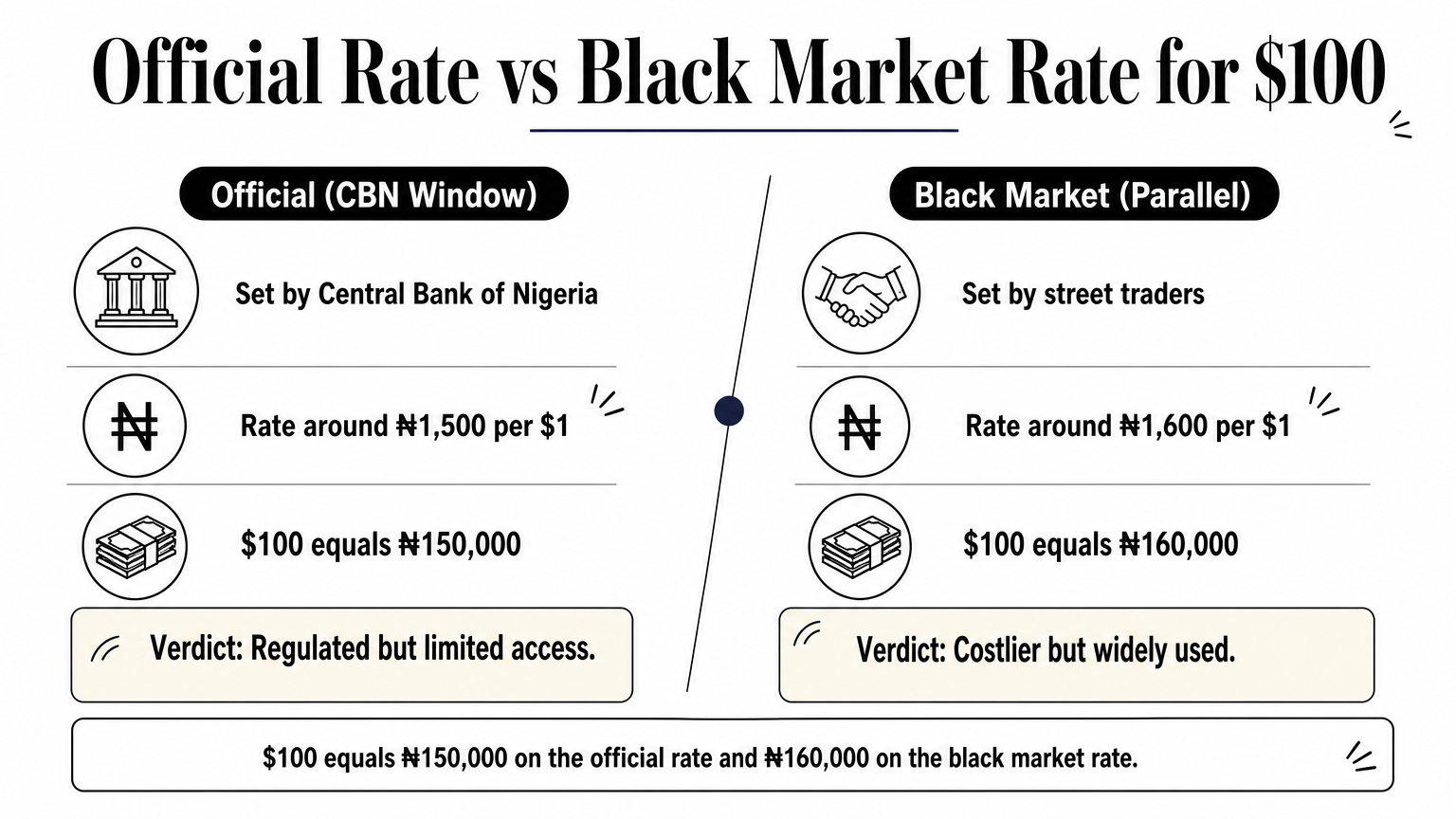
Two rates exist for the same dollar because Nigeria runs two markets, one regulated and one driven purely by street demand.
Here’s a snapshot of how the two typically compare, using rounded figures to illustrate the spread rather than a fixed daily quote:
| Rate Type | Approx. Rate per $1 | 100 US Dollar to Naira |
|---|---|---|
| Official (CBN window) | ₦1,500 | ₦150,000 |
| Black market (parallel) | ₦1,600 | ₦160,000 |
Those numbers shift constantly, so treat them as a template for comparison, not gospel. Nigeria's unified exchange rate policy was supposed to close this gap, and it has narrowed at times, but scarcity of dollars at official channels keeps pushing demand back to the street. Sellers on the parallel market often adjust prices within hours of major news, while banks move slower because they follow CBN guidance. Understanding which market you're dealing with matters more than memorizing a single number, since quoting the wrong rate to a buyer or sender can cost real money. For live updates on how these two markets are tracking, check topnigeria.ng/'s currency coverage alongside the official CBN data.
How to convert 100 dollars to naira accurately
Getting an accurate figure for 100 us dollar to nigerian naira starts with picking the right rate for your situation, not just grabbing the first number Google shows you. A bank transfer, a BDC cash exchange, and a P2P crypto trade all use different rates, so the math changes depending on which channel you’re actually using to move money.
The basic formula
Multiply the dollar amount by the exchange rate for whichever market applies to you. If you’re asking how much is 100 dollar to naira through an official bank channel, use the CBN-linked rate; if you’re dealing with a street trader, use the parallel rate instead.
100 (USD) x exchange rate (NGN per USD) = amount in naira
Example: 100 x 1,550 = ₦155,000
Multiplying by the wrong rate is the single most common mistake people make when converting dollars to naira.
Steps to get a reliable figure
Follow this sequence every time you need a number you can trust:
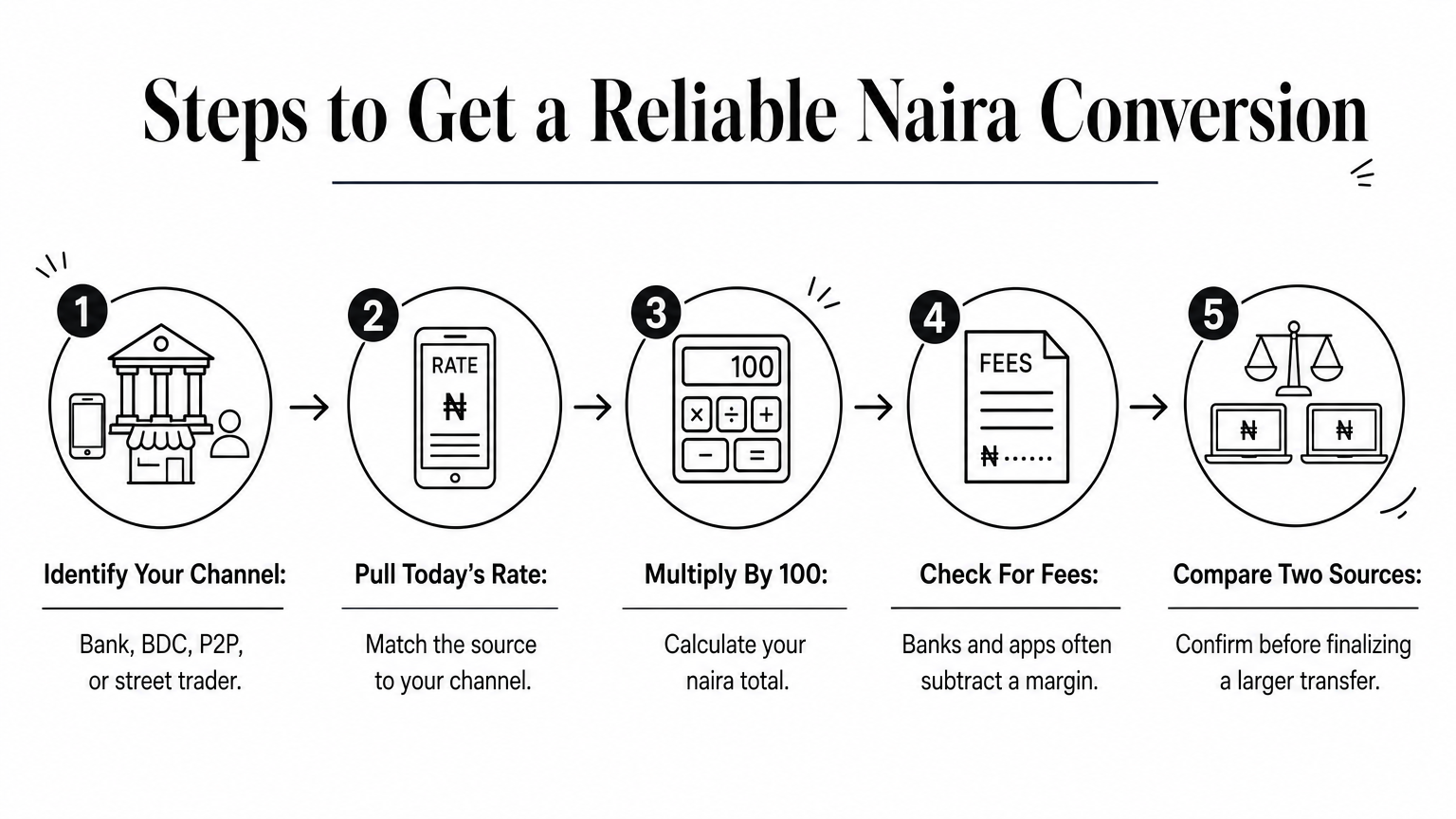
- Identify your channel (bank, licensed BDC, P2P platform, or street trader)
- Pull today’s rate from a source matching that channel, not a random app
- Multiply by 100 to get your naira total
- Check for fees, since banks and remittance apps often subtract a margin before you see the payout
- Compare two sources before finalizing, especially for larger transfers
Skipping step four trips up a lot of people, because the advertised rate rarely matches the amount that actually lands in a Nigerian account. Fees on remittance apps and bank wires can shave off several thousand naira from a 100 dollar transfer, so always ask for the final payout figure, not just the headline rate, before you commit to a provider.
Quick reference table for common dollar amounts
Knowing the rate for 100 US dollar to nigerian naira is useful, but most readers also want to see how smaller or larger amounts scale, whether they’re sending $20 to a relative or converting $500 for a trip. Rather than force you to do the math each time, here’s a table using the same illustrative rates from earlier, so you can compare both markets at a glance and estimate your own figure quickly.
A quick reference table saves you from doing mental math under pressure, especially when a trader is waiting for your answer.
| Dollar Amount | Official Rate (₦1,500/$1) | Black Market Rate (₦1,600/$1) |
|---|---|---|
| $10 | ₦15,000 | ₦16,000 |
| $20 | ₦30,000 | ₦32,000 |
| $50 | ₦75,000 | ₦80,000 |
| $100 | ₦150,000 | ₦160,000 |
| $200 | ₦300,000 | ₦320,000 |
| $500 | ₦750,000 | ₦800,000 |
Scaling the numbers yourself
Once you understand how the 100 dollar to naira figure is built, scaling up or down is simple arithmetic, not a new lookup. Divide the $100 result by 10 to estimate $10, or multiply by 5 to estimate $500, and you’ll land close enough for planning purposes even before checking a live rate. This mental shortcut matters most when you’re negotiating with a street trader who quotes fast and expects a quick response, since hesitating over basic math can cost you a better deal or make you look like an easy target for a lowball offer.
Remember that these figures move daily, so treat the table as a structure for comparison rather than a fixed price you can quote weeks from now.
Tips for getting the best rate when exchanging dollars
Getting the best value for your 100 US dollar to nigerian naira conversion isn’t about luck, it’s about timing and knowing where to look. Rates fluctuate hour to hour on the parallel market, so checking multiple sources before you commit can mean the difference between a fair deal and losing thousands of naira to a bad quote.
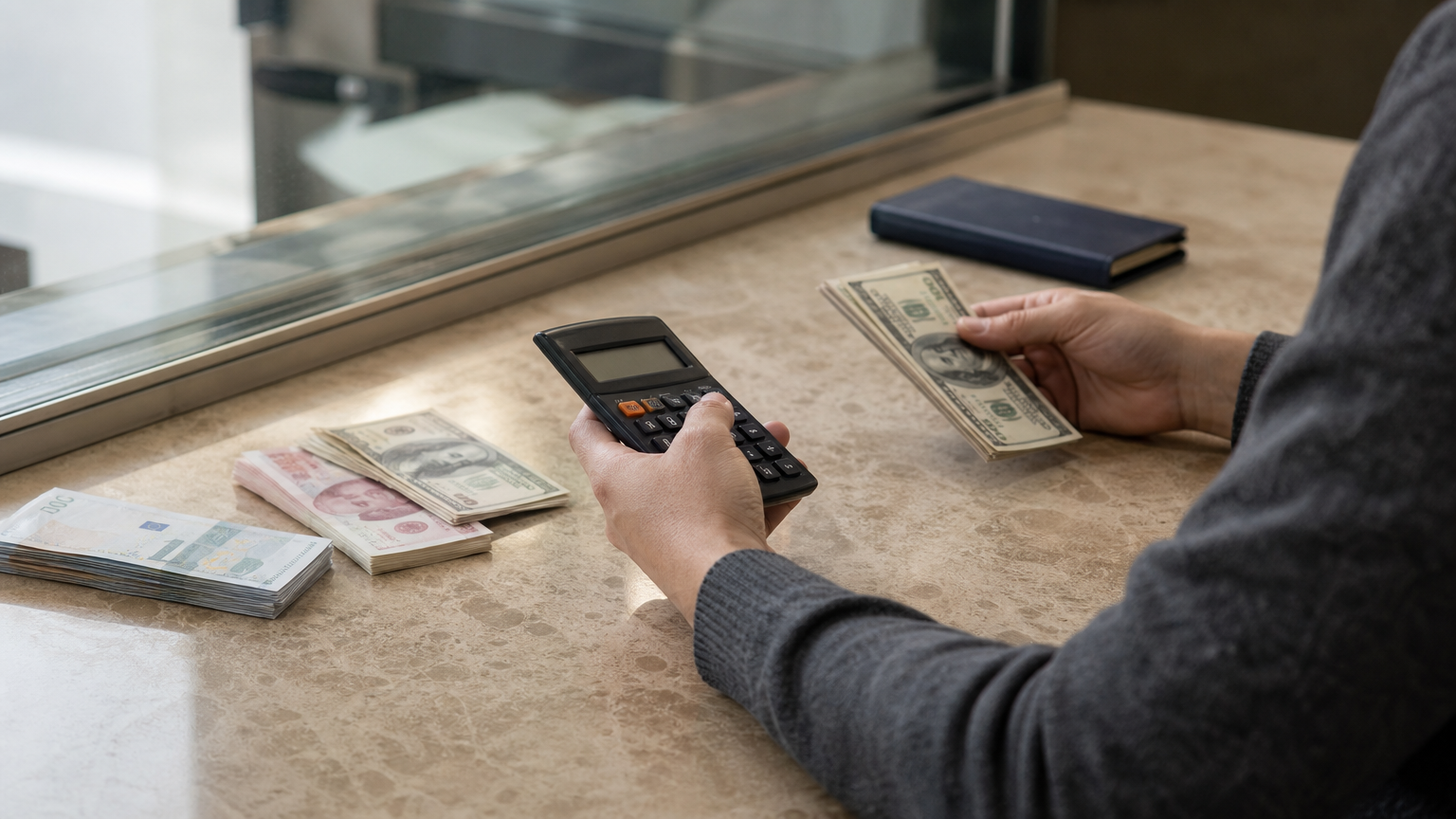
Before you exchange, compare quotes from at least two or three providers, since BDC operators in the same neighborhood often quote differently depending on their own dollar supply that day. Licensed Bureau de Change operators tend to offer more consistency than random street traders, and they’re easier to hold accountable if something goes wrong with your transaction.
Never accept the first rate you’re offered, a second opinion almost always saves you money.
Consider these practical steps whenever you’re converting cash:
- Avoid airports and hotels, where rates are almost always worse than what you’d get downtown
- Exchange during weekday business hours, since weekend rates from informal traders often carry a premium
- Use P2P platforms cautiously, checking seller ratings and transaction history before sending funds
- Ask for the naira total upfront, not just the per-dollar rate, to avoid rounding tricks
- Track the trend for a few days, since a rate that’s climbing might be worth waiting on
Don’t ignore fees hidden in remittance apps either, since a slightly better headline rate can still leave you worse off after transfer charges. Finally, keep some flexibility in your timing if possible. If you’re not converting for an urgent need, watching the hundred dollar to naira rate over a week or two often reveals a better entry point than exchanging the moment you decide to.
Keeping track of the dollar to naira rate
At this point you’ve seen that 100 US dollar to nigerian naira never has one fixed answer. The official window and the parallel market both move for their own reasons, and the gap between them can widen or shrink within days depending on oil revenue, CBN policy, and plain street demand. What matters isn’t memorizing today’s number, it’s knowing which market applies to your transaction and checking a current source before you commit.
Whether you’re sending money to family, planning a trip, or just curious how far your dollars stretch, treat every rate you see as a snapshot, not a fixed price. Compare a couple of providers, factor in fees, and you’ll avoid the common mistakes that cost people real naira. Since these figures shift constantly, it pays to stay updated rather than rely on last week’s quote. For fresh currency updates alongside the Nigerian business news that shapes them, read our latest coverage, like Dangote’s response to investors demanding daily updates on the Dangote Cement IPO, before your next exchange.