
The Rule of Law and Accountability Advocacy Centre (RULAAC) has accused the Nigerian police of sustaining a culture of impunity six years after the #EndSARS protests, citing continuing allegations of torture, unlawful detention, extortion, extrajudicial killings and enforced disappearances.
In a statement issued on Tuesday to mark the sixth anniversary of the October 2020 protests, RULAAC Executive Director Okechukwu Nwanguma said police reforms introduced after the disbandment of the Special Anti-Robbery Squad (SARS) had failed to fundamentally address the abuses that triggered nationwide demonstrations.
“The central question six years after #EndSARS is therefore not whether reforms were announced, but whether policing has become more lawful, professional, humane and accountable,” the organisation said.
RULAAC added that the gap between official reform commitments and policing practices remained a serious concern.
#EndSARS: RULAAC Questions Implementation of Police Reforms
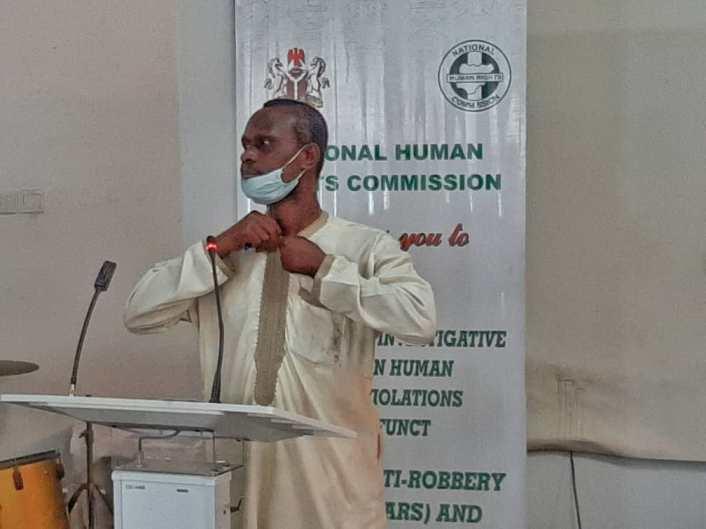
The October 2020 #EndSARS protests followed years of allegations of police brutality, particularly against SARS personnel. The demonstrations led to the disbandment of the unit and the establishment of judicial panels of inquiry to investigate complaints and recommend remedies for victims.
The panels received thousands of petitions, with some victims awarded compensation and some officers recommended for prosecution or disciplinary action.
However, RULAAC described the implementation of the recommendations as fragmented, opaque and inadequate, particularly in relation to criminal accountability, institutional reform, rehabilitation and comprehensive compensation for victims.
The organisation questioned how many former SARS officers had been investigated, disciplined, dismissed or prosecuted. It also asked whether personnel had undergone psychological assessments and retraining, and whether authorities had disclosed where officers removed from SARS were subsequently deployed.
“Redeployment is not accountability, and changing the name of a police unit is not institutional reform,” RULAAC maintained.
Police Practices Still Raise Human Rights Concerns
RULAAC said existing legislation, including the Police Act 2020, the Anti-Torture Act 2017 and the Administration of Criminal Justice Act 2015, provides safeguards against arbitrary arrest, unlawful detention, torture and other abuses.
However, the organisation argued that everyday policing practices continued to fall short of those legal protections.
It identified alleged practices including arrests before investigations, police involvement in civil disputes and debt recovery, prolonged detention without lawful justification, denial of access to lawyers and relatives, coercive interrogation, and demands for unlawful payments as conditions for bail or release.
According to RULAAC, these problems reflect deeper institutional weaknesses involving operational culture, supervision, command responsibility, incentives and accountability.
The organisation said concerns about police misconduct predated the October 2020 protests, despite years of warnings and reform announcements by successive inspectors-general of police.
Nwanguma recalled that, before establishing RULAAC, he served as national coordinator of the Network on Police Reform in Nigeria and headed the Police Research Project of the Civil Liberties Organisation.
Through those platforms, he said, civil society groups documented alleged abuses, supported victims, submitted petitions and pursued litigation.
He argued that previous restrictions and restructuring measures targeting SARS did not end the abuses because they were rarely accompanied by transparent investigations, effective supervision or meaningful sanctions.
RULAAC Seeks Justice for #EndSARS Survivor Ngozichukwu
RULAAC cited the case of a woman identified as Ngozichukwu as an example of the challenges survivors continue to face in seeking justice.
According to the organisation, Ngozichukwu was abducted, taken to Abuja and severely tortured at a facility associated with the Intelligence Response Team formerly led by Abba Kyari.
RULAAC alleged that she suffered further torture after her transfer to Abuja, sustaining fractured wrists and deep cuts. It also claimed she was starved, denied medical treatment and held for a prolonged period in degrading conditions.
The organisation said she was targeted because she contributed a small amount of money towards medical treatment for people injured during the #EndSARS period in the South-east.
According to RULAAC, Ngozichukwu subsequently instituted a fundamental rights enforcement action and obtained a judgment against the police. The organisation alleged that the police had neither complied with the judgment nor paid the compensation awarded to her.
It called on the Inspector-General of Police and other responsible authorities to ensure immediate compliance with the court’s orders.
“A police institution constitutionally charged with enforcing the law cannot place itself above the law,” RULAAC said, stressing that compliance with court judgments was mandatory.
The organisation argued that her case demonstrated how victims could continue to experience injustice even after securing favourable court decisions.
RULAAC Raises Concerns Over Adaeze Akwaja’s Alleged Torture
The organisation also highlighted the case of Adaeze Akwaja, who it said had described severe torture involving personnel associated with Tiger Base in Imo State and the former Abba Kyari team.
According to RULAAC, Akwaja continues to experience serious health complications arising from the alleged abuse.
The organisation called for an independent investigation, appropriate medical documentation and effective remedies.
“Survivors should not have to become campaigners before the state recognises and protects their rights,” it said.
Coroner’s Findings on Japheth Njoku’s Death at Tiger Base
RULAAC also called for the implementation of recommendations arising from a coroner’s inquest into the death of Japheth Njoku, who reportedly died in police custody at Tiger Base, the Imo State Police Command’s Anti-Kidnapping Unit in Owerri, in May 2025.
According to reports of the findings, the 32-year-old had been detained for about six weeks over an alleged theft before his death.
The coroner reportedly recommended the prosecution of two police officers over alleged extortion and corruption, as well as compensation for Njoku’s family.
RULAAC said the findings, issued in late September, identified serious misconduct associated with his detention, including alleged torture, overcrowding, extortion and denial of bail.
The organisation urged the relevant authorities to implement the recommendations through further investigation, prosecution where supported by evidence, and appropriate disciplinary action, while respecting due process.
RULAAC Calls for Action on Enforced Disappearances
RULAAC also raised concerns about reports of people allegedly arrested and transferred to distant detention facilities, held incommunicado or denied access to their families and lawyers.
It said some families continued to search for relatives whose whereabouts remained unknown.
The organisation called for a central electronic custody register, mandatory notification of arrests and transfers, independent access to detention facilities and effective investigations into alleged enforced disappearances.
“No family should be forced to search indefinitely through police stations, military facilities, detention centres and mortuaries for a relative taken away by state agents,” RULAAC said.
It argued that transparent custody records and independent oversight were necessary to help prevent abuses and establish the whereabouts of detained persons.
RULAAC Lists Demands for Police Accountability
RULAAC called on President Bola Tinubu, the Inspector-General of Police, the Police Service Commission, the National Assembly, the National Human Rights Commission, state governments and relevant prosecutorial authorities to demonstrate measurable progress in police reform.
Its demands include:
- Full implementation of existing laws protecting citizens against police abuse.
- Publication of outstanding reports from judicial panels of inquiry.
- An audit of former SARS personnel and their subsequent postings.
- Independent investigations into allegations of torture, extrajudicial killings, enforced disappearances and deaths in custody.
- Stronger civilian oversight and publication of disciplinary outcomes.
- Protection for complainants and witnesses.
- Effective enforcement of court judgments against the police.
- Improved police welfare, including remuneration, accommodation, operational resources, insurance, retirement benefits and psychological support.
The organisation acknowledged the need to improve the welfare and working conditions of police officers but maintained that such improvements could not justify torture, extortion, unlawful detention or extrajudicial killings.
“Police officers deserve dignity, fair treatment and decent working conditions. Citizens deserve safety, respect and protection from abuse,” RULAAC said, adding that the objectives were complementary rather than contradictory.
Lekki Toll Gate Remains a Symbol of Unresolved #EndSARS Questions
RULAAC said the events at the Lekki Toll Gate on October 20, 2020, remained a defining symbol of the breakdown of trust between citizens and the state.
It argued that unresolved questions surrounding the use of force against protesters and accountability for alleged violations continued to affect public confidence in the government’s response to the demonstrations.
The organisation said Nigeria needed consistent enforcement of existing laws and demonstrable changes in police conduct rather than another cycle of reform announcements.
“Nigeria owes victims and their families more than remembrance,” RULAAC said. “It owes them truth, justice, effective remedies and guarantees of non-recurrence.”
RULAAC’s Role in Police Accountability Advocacy
RULAAC is a not-for-profit human rights advocacy organisation focused on law enforcement accountability, transparent policing, legal defence, policy criticism and documentation of human rights violations.
The organisation documented alleged abuses by SARS before the 2020 protests and played advocacy roles before, during and after the demonstrations.
It also opposed an attempt by the Lagos State Police Command to impose a blanket ban on public demonstrations during protests in 2023.
RULAAC has continued to monitor annual #EndSARS memorials, including gatherings at the Lekki Toll Gate, and to demand the implementation of judicial-panel recommendations on police brutality, compensation and institutional reform.
Six years after the protests, the organisation says the central test of reform is whether authorities can demonstrate accountability, enforce court judgments and prevent the recurrence of abuses against citizens.