

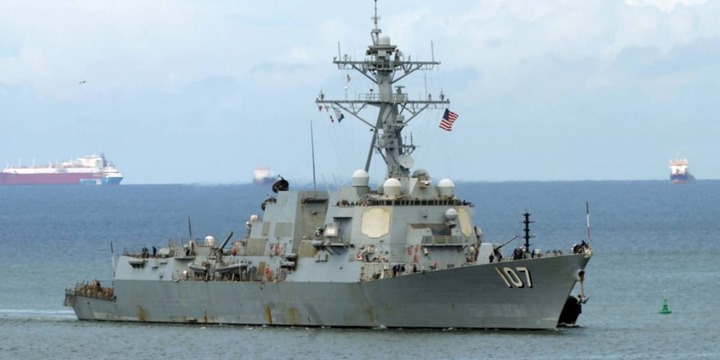
According to a report by Reuters on Wednesday 15 April, 2026, a US Navy destroyer intercepted two oil tankers trying to leave Iranian waters on Tuesday, turning them back shortly after they set off – an early sign of how Washington’s newly imposed blockade is being enforced.
According to a U.S. official who spoke on condition of anonymity, the vessels had departed from Chabahar port along the Gulf of Oman before being contacted by the American warship over radio. They were instructed to reverse course, though it’s not entirely clear what additional warnings, if any, were issued.
The incident offers a glimpse into the opening phase of the blockade ordered by President Donald Trump, which is designed to pressure Tehran into reopening the Strait of Hormuz — a vital artery for global oil shipments that has effectively been under Iranian control in recent weeks.
Washington is betting that restricting Iran’s ability to export oil will weaken its negotiating position and push it toward accepting U.S. terms for ending the conflict, which began in late February. Those terms reportedly include restoring free passage through the strait, something the U.S. also tied to a fragile ceasefire announced not long ago.
Still, it’s early days. Analysts caution that it’s too soon to gauge how effective the blockade will be, especially given the opaque nature of shipping linked to Iranian oil. Some vessels, they note, often switch off tracking systems, making movements harder to verify.
The two tankers turned back this week are believed to be among several ships that have already complied with U.S. directives. Central Command has said no vessel has successfully breached the blockade since it came into force.
Behind the scenes, the scale of the operation is significant – more than 10,000 U.S. personnel, backed by warships and aircraft, are involved. At the same time, American officials insist that ships merely passing through the Strait of Hormuz, as long as they’re not heading to Iranian ports, are still free to move.
The stakes, however, are high. While the blockade could strip Iran of one of its strongest bargaining tools, experts warn it also risks provoking retaliation. Tehran has previously threatened to target shipping and even strike Gulf states hosting U.S. forces.
At the moment, the situation feels like a test phase – both sides watching, probing, and waiting to see how far the other is willing to go.