
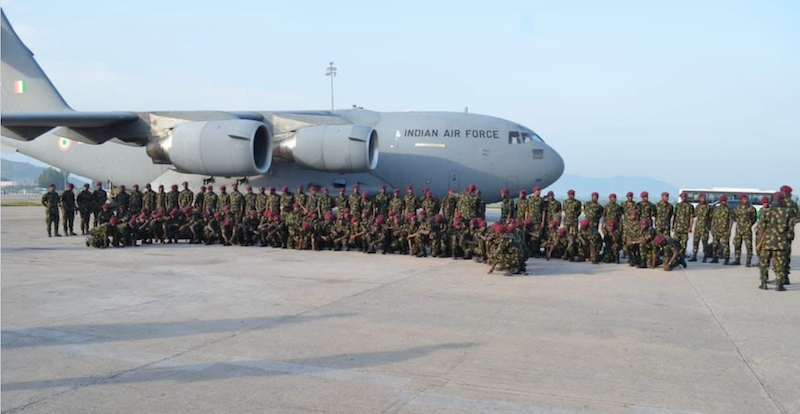
The Nigerian Army has begun deploying 600 soldiers to India for specialised jungle and mountain warfare training aimed at strengthening the military’s operational capabilities against terrorists, insurgents and other criminal groups operating in difficult terrain.
The first batch of 300 soldiers departed the Nnamdi Azikiwe International Airport in Abuja on Thursday, October 22, 2026, aboard two Indian Air Force aircraft: a C-17 military transport aircraft and an Airbus A321.
The deployment was confirmed on Friday in a statement issued by the Acting Director of Army Public Relations, Colonel Appolonia Anele, who said the programme was part of ongoing efforts to build a more professional, adaptable and combat-ready Nigerian Army.
The remaining 300 personnel are expected to travel to India to complete the planned deployment of 600 soldiers for the specialised military training.
Nigerian Army Targets Improved Combat Readiness
According to the army, the training programme is designed to improve the soldiers’ combat proficiency and prepare them for operations in challenging environments that demand specialised skills, physical endurance, tactical coordination and effective decision-making under pressure.
The exercise will expose participating personnel to techniques for operating in forests, mountainous regions and other difficult geographical conditions where conventional military operations can be challenging.
The training is also expected to strengthen the army’s ability to respond to evolving security threats and protect Nigeria’s territorial integrity.
Colonel Anele said the initiative reflected the commitment of the Chief of Army Staff, Lieutenant General Waidi Shaibu, to improving the fighting capacity of the Nigerian Army and preparing its personnel to confront security challenges across the country.
The army’s leadership has continued to emphasise personnel development, realistic military exercises and improved combat readiness as important elements of its operational priorities.
Senior Military Officials Witness First Deployment
The departure of the first batch of soldiers was witnessed by Major General UG Yusuf, Coordinator of the Nigerian Military Training Support and Advisory Team under the Army Headquarters Department of Army Training.
Yusuf represented the Chief of Army Staff at the airport ceremony.
The Indian High Commissioner to Nigeria was also present to witness the departure, highlighting the defence relationship between Nigeria and India and their continued engagement in military training and capacity development.
The participation of officials from both countries underscores the importance of bilateral cooperation in strengthening military expertise and developing the capabilities required to address evolving security challenges.
The army said the specialised programme would reinforce the existing relationship between Nigeria and India while supporting its broader objective of maintaining a force capable of defending the country’s sovereignty.
Why Jungle and Mountain Warfare Training Matters
Jungle and mountain warfare requires specialised military skills because soldiers operating in these environments often face conditions that differ significantly from conventional battlefields.
Thick vegetation, steep landscapes, restricted visibility and limited access routes can complicate troop movements, communication and coordination during military operations.
These conditions can also create challenges in transporting equipment, delivering supplies and evacuating injured personnel.
Soldiers operating in such environments must therefore develop the ability to navigate difficult terrain, coordinate movements effectively and make sound tactical decisions under pressure.
The Nigerian Army expects the training in India to improve participating personnel’s ability to manage these challenges and operate more effectively in difficult geographical conditions.
The skills acquired could support military operations in areas where terrain and environmental conditions complicate access and limit the effectiveness of conventional approaches.
However, the practical benefits of the programme will depend on how the soldiers apply their training after returning to Nigeria and how the acquired skills are incorporated into operational planning, field exercises and joint military operations.
Army Confirms Plans to Deploy Remaining 300 Soldiers
The Nigerian Army has confirmed that preparations are ongoing to transport the second batch of 300 soldiers to India for the specialised training.
In the statement, the army said: “Arrangements are underway to airlift the remaining 300 personnel to India for the training.”
The second deployment will complete the planned movement of 600 soldiers for the programme.
However, the army has not announced a specific departure date for the remaining personnel.
It has also not publicly disclosed the precise training locations in India, the duration of the programme, the detailed curriculum or the military units expected to participate.
These details will be important in assessing the full scope of the exercise and the extent to which it will contribute to the army’s operational capabilities.
Nigeria-India Defence Cooperation
The specialised training forms part of the continuing engagement between Nigeria and India in military training and professional development.
For the Nigerian Army, the initiative is intended to strengthen personnel capabilities and improve preparedness for security operations across different types of terrain.
The army said the programme reflected its leadership’s determination to maintain a force capable of responding effectively to security threats while protecting the lives and property of Nigerians.
As preparations continue for the deployment of the remaining soldiers, attention will turn to the completion of the training and the application of the acquired skills when the personnel return to their operational duties.
The programme’s long-term impact will ultimately depend on how effectively the lessons learned in India are integrated into the Nigerian Army’s training systems, tactical planning and operational activities.