

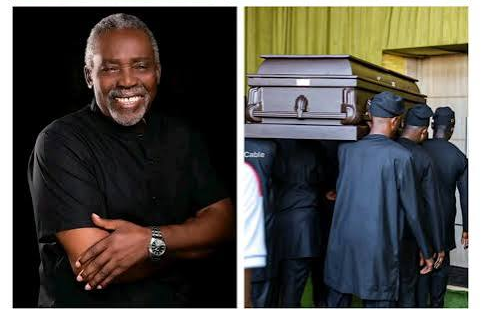
Veteran Nigerian actor Olu Jacobs has been laid to rest in Lagos following a funeral service attended by family members, friends, colleagues and dignitaries from across Nigeria’s entertainment industry and beyond.
The funeral service was held on Friday at This Present House on Freedom Way in the Lekki area of Lagos, bringing to a close several days of activities organised to honour the acclaimed actor.
Lagos State Deputy Governor Obafemi Hamzat led government officials at the ceremony and described Jacobs as an “icon of the entertainment industry.”
Hamzat, in a post on X, said he joined the actor’s family, friends and loved ones to bid farewell to the veteran entertainer while reflecting on the memories he left behind.
Singer Dare Art Alade performed his song Pray for Me during the funeral service, while several Nollywood personalities, including Kate Henshaw, Stan Nze and Ernest Obi, were also present.
Following the service, the hearse proceeded to the burial site, where Olu Jacobs’ remains were laid to rest.
The funeral followed a night of tributes and a service of songs on Wednesday, as family, colleagues and admirers celebrated Jacobs’ decades-long contribution to Nigeria’s entertainment industry.
Olu Jacobs’ acting career and legacy
Born on July 11, 1942, Olu Jacobs built an illustrious acting career spanning British theatre and television, international productions and Nollywood.
He trained at the Royal Academy of Dramatic Art (RADA) in London before appearing in several British television productions, including The Goodies, Till Death Us Do Part, Barlow at Large, The Venturers, Angels, The Tomorrow People and The Professionals.
After returning to Nigeria, Jacobs became one of the most recognisable faces in Nollywood. He was particularly known for portraying authoritative characters, including traditional rulers, chiefs and father figures.
Jacobs married fellow actress Joke Silva in 1989. Together, they co-founded the Lufodo Group and the Lufodo Academy of Performing Arts, further contributing to the development of Nigeria’s creative industry.
His career and influence made him a significant figure in Nigerian theatre, television and film, with generations of actors and audiences recognising his contribution to the growth of the country’s entertainment sector.